Most people choose an Alpine resort by reputation, and in January that works well enough: every famous name is doing what it is famous for. It works less well in July, and hardly at all in May or November, when many of the grand hotels have shut and some villages feel closed for business. A better question than "which resort is best?" is "which resort is best in the weeks I can travel?"
How the Alpine year works
The high Alps run on two seasons with gaps between them. Winter usually opens in early December and runs to Easter or a little beyond. Summer begins in mid- to late June, once the higher paths are clear, and tails off through September. The weeks in between, the Zwischensaison as German-speaking Switzerland calls it, are when hotels close for maintenance and staff holidays, often for two months or more.
Altitude shapes the rest. Higher resorts hold their snow longer and give more dependable skiing at either end of the winter; lower villages trade some of that certainty for gentler scenery and a longer, greener summer. For any trip in April, June, October or November, check the individual hotel's opening dates, not just the resort's.
Zermatt and the Engadin: two true seasons
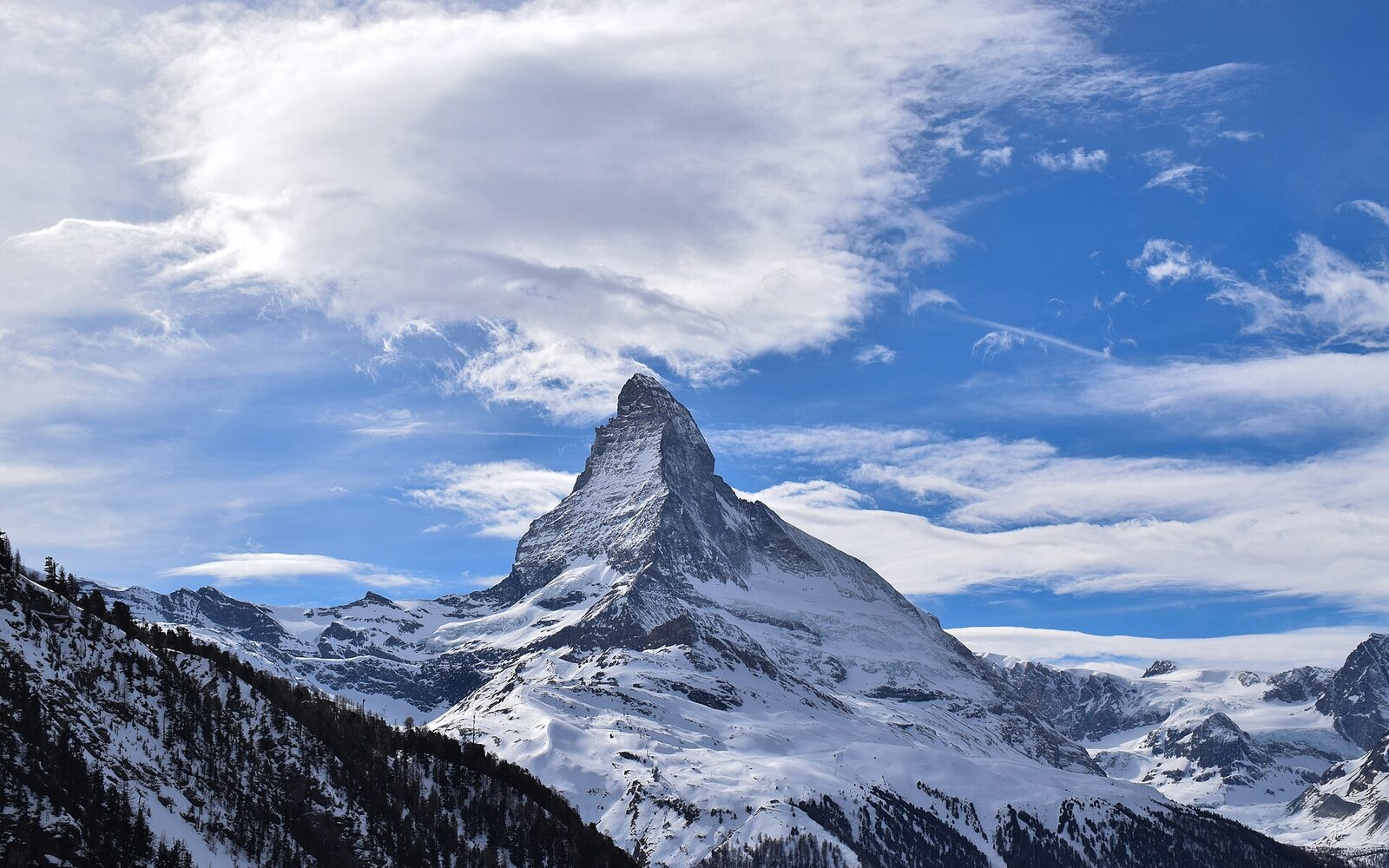
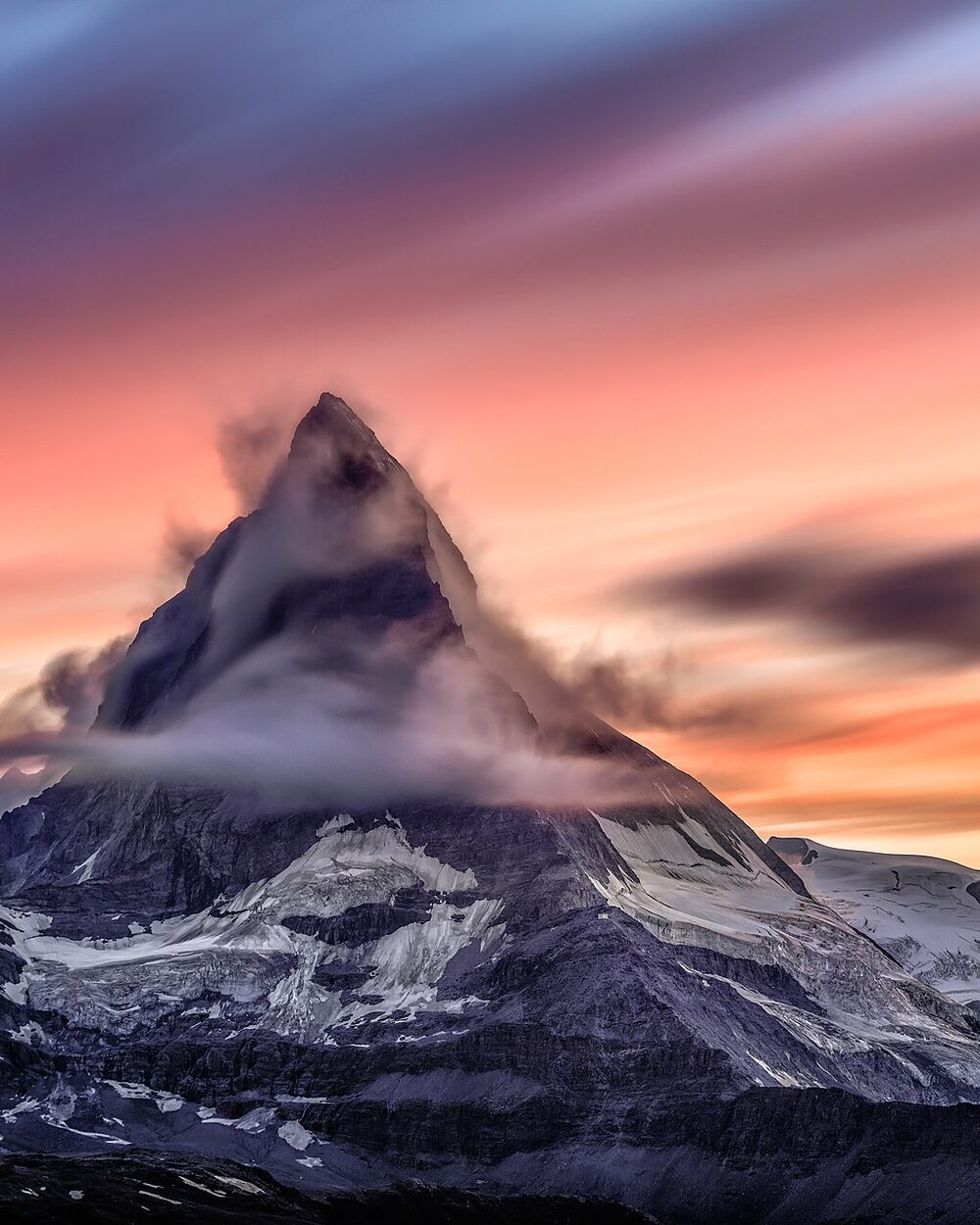
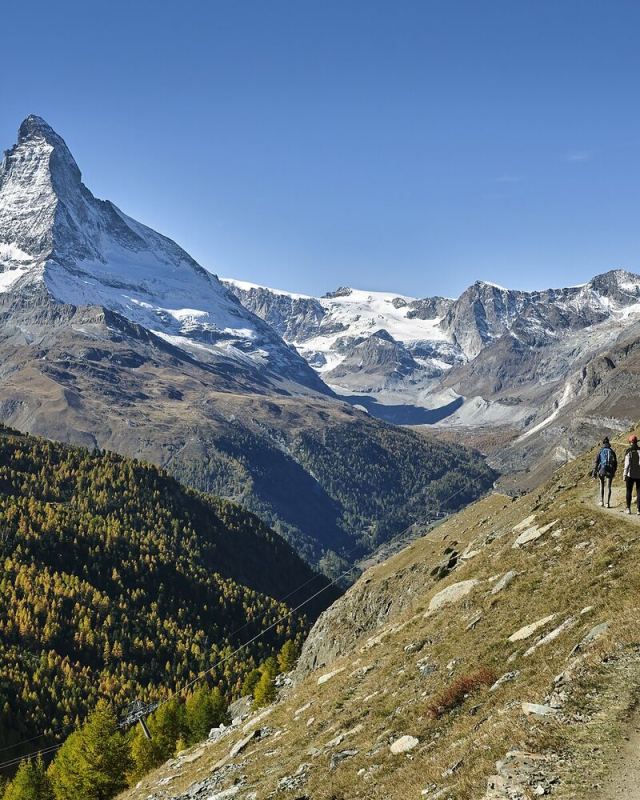
Zermatt's village is car-free, the Matterhorn closes the head of the valley, and the skiing crosses the border to Cervinia, with glacier terrain high enough to keep some runs open well beyond the usual season. Riffelalp Resort 2222m sits on a shelf far above the village, reached only by the Gornergrat railway and the hotel's own small tram. In winter you ski from the door; in summer the walks to the Riffelsee and the Gorner glacier viewpoints start outside it. Once the last train has gone, the terrace and the view of the Matterhorn's north face belong to guests. It opens roughly late June to late September and mid-December to mid-April, with rates from around £550 a night.
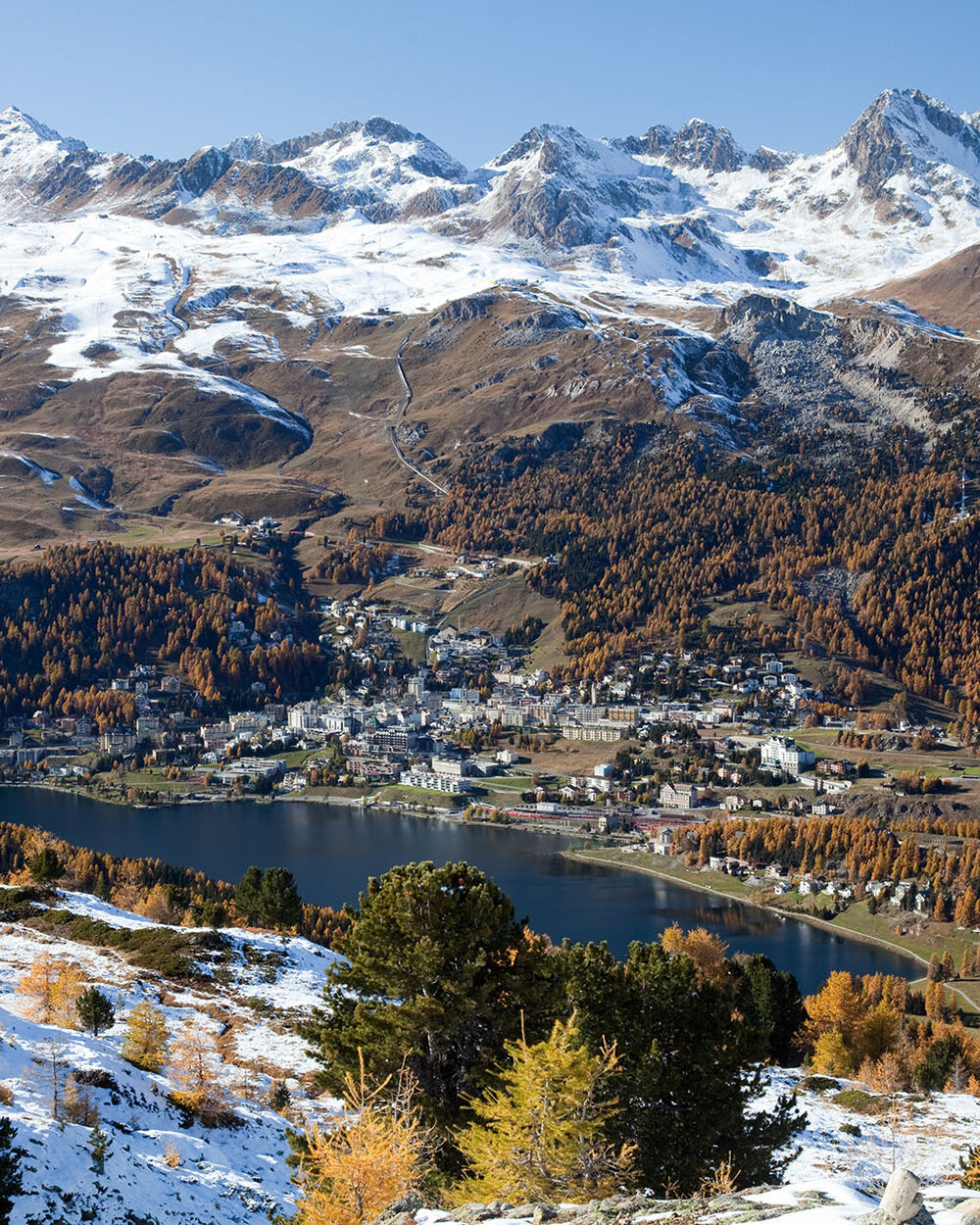
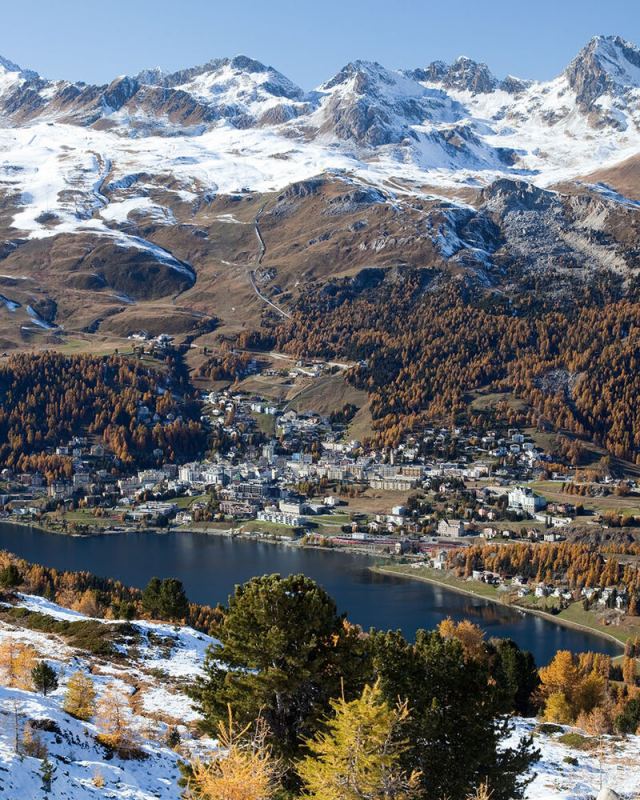
The Engadin, in eastern Switzerland, is a high, broad valley of lakes and larch forest known for dry, sunny winters. St Moritz is its social capital, and Badrutt's Palace Hotel, opened in 1896 by the family widely credited with starting winter tourism here, is its landmark. The winter season is formal (the grand dining room still keeps a dress code), while summer is about hiking, sailing and cycling. The hotel closes completely between the two: the 2026 summer season ended on 7 September, and winter is scheduled from 3 December 2026 to 30 March 2027.
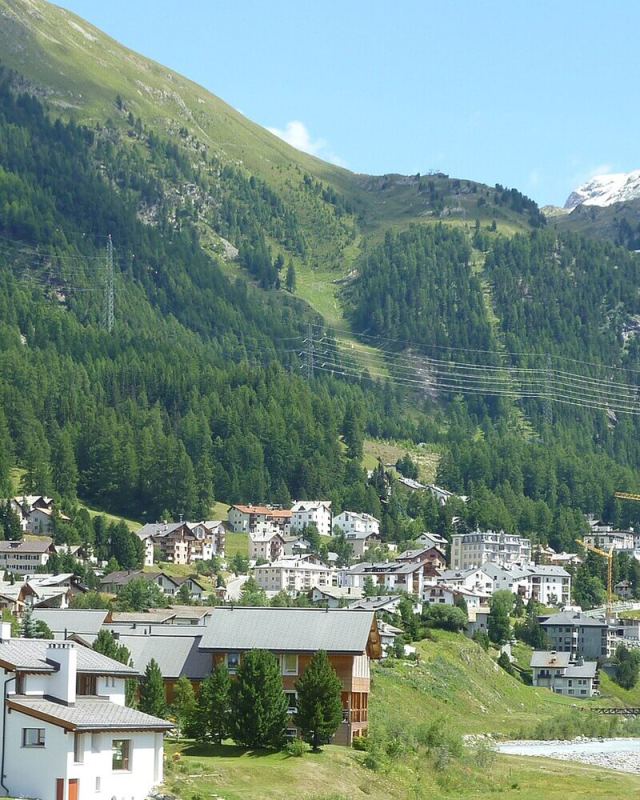
A few minutes down the valley, Pontresina is quieter and, for some, the better base. Grand Hotel Kronenhof dates from 1848, with frescoed public rooms still in everyday use, a 2,000-square-metre spa and a view straight down the Roseg valley to its glacier. Diavolezza, Corvatsch and Corviglia are all within reach in winter, and the Engadin has some of the finest cross-country skiing in the Alps. Its current calendar runs from 12 June 2026 to 4 April 2027, closing only in spring, which makes it a rare option for October, when the larches turn gold.
Photographs: Wikimedia Commons contributors — select to enlarge for full credits.
Gstaad, Verbier and Courchevel: winter first
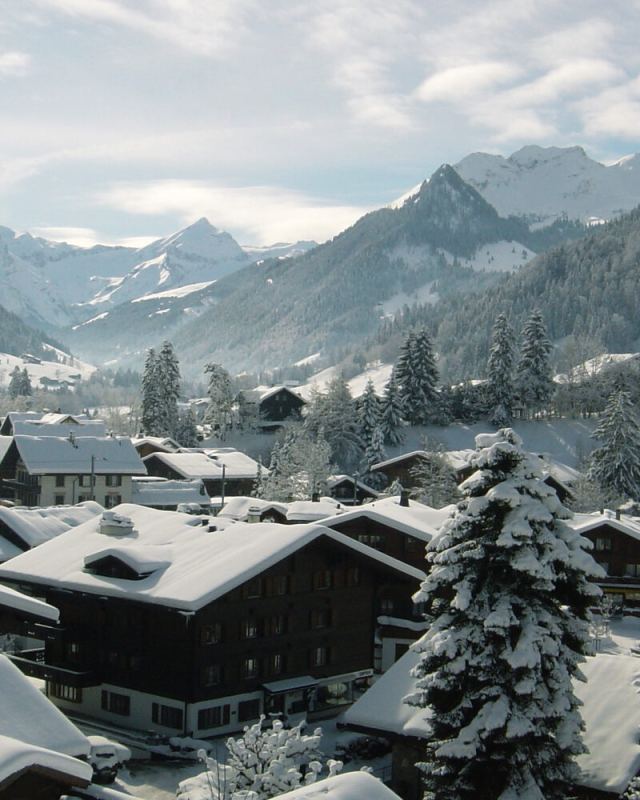
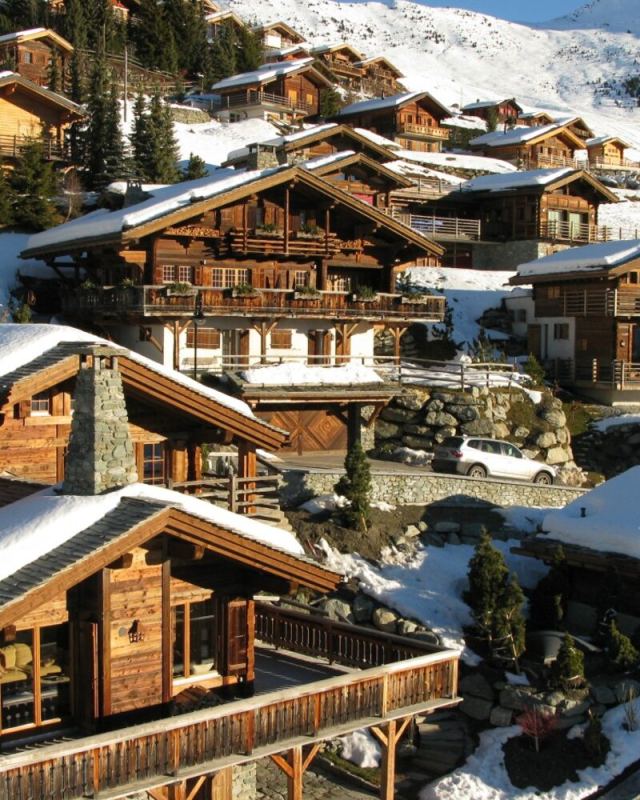
Gstaad is the lowest and most village-like; its most snow-sure skiing is a short drive away at Glacier 3000, and the appeal lies as much in the Saanenland's chalets, farmland and summer walks as in the pistes. The Alpina Gstaad, which opened in 2012 as the village's first new hotel in a century, has 56 rooms and suites, a 2,000-square-metre Six Senses spa and balconies angled south across the valley. Rates start from around US$1,900 a night.
Verbier is the serious skier's choice: extensive, demanding terrain across the Quatre Vallées, with lift-served skiing from 1,500 to around 3,300 metres. Experimental Chalet Verbier stands in the middle of the resort, with 39 rooms, a Biologique Recherche spa and, underneath, the Farm Club, which has been running since 1971. It is essentially a winter hotel, open roughly December to April; summer opening varies from year to year.
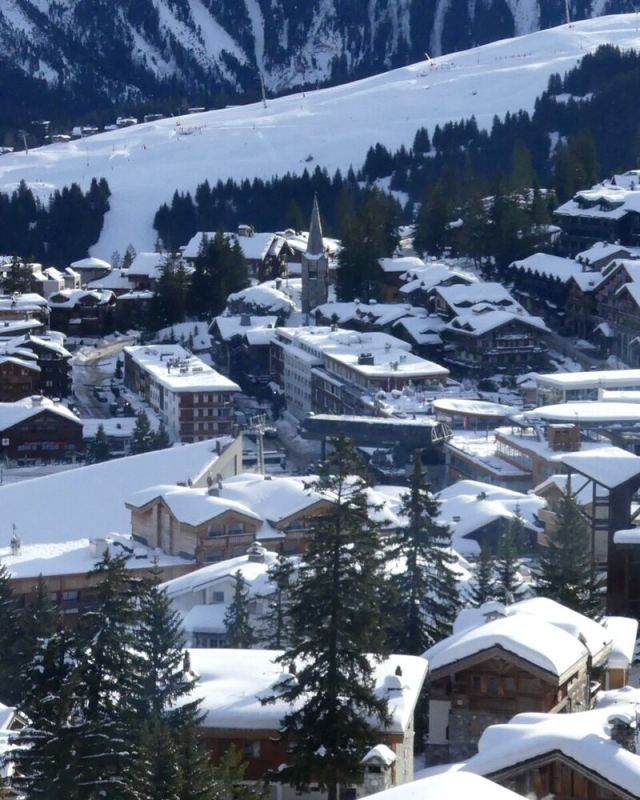
Courchevel 1850 is the grandest address in the French Alps, part of the Trois Vallées, one of the largest linked ski areas in the world. Airelles Courchevel, Les Airelles occupies the Jardin Alpin with genuine ski-in, ski-out access, a gastronomic restaurant with long-standing Michelin recognition and a children's programme taken unusually seriously. It is strictly a winter hotel, open roughly December to April, from around €1,225 a night.
Andermatt and the Dolomites: stronger in summer than you might think
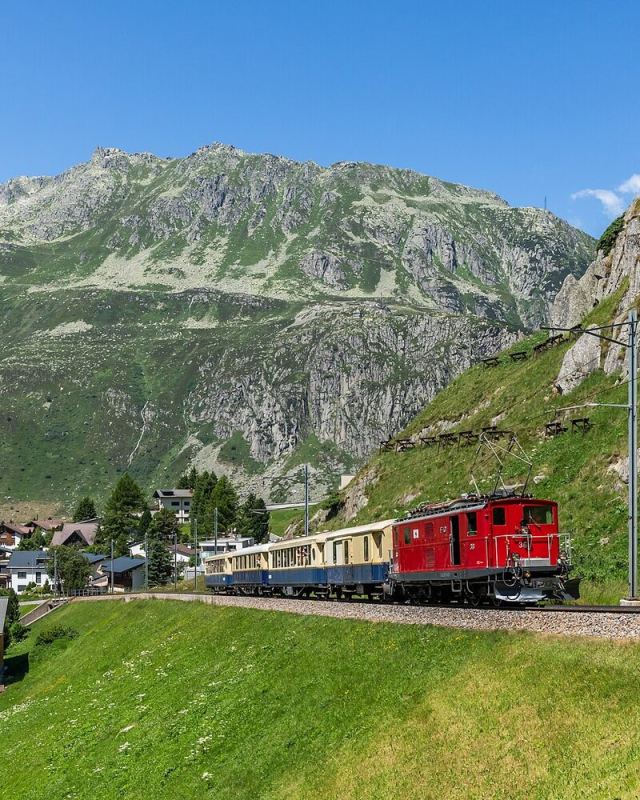
Andermatt, where the routes to the Gotthard, Furka and Oberalp passes meet, has turned from a garrison village into a resort in little more than a decade. The Chedi Andermatt, opened in 2013, is its anchor: chalet materials arranged with the calm of an Asian resort, an open fireplace in every room, a 35-metre indoor pool and a kitchen worth the journey. Skiing links through to Sedrun and Disentis, and the Gemsstock is known for steep off-piste. In summer the passes draw drivers and cyclists, and, crucially for awkward dates, the hotel is open all year.
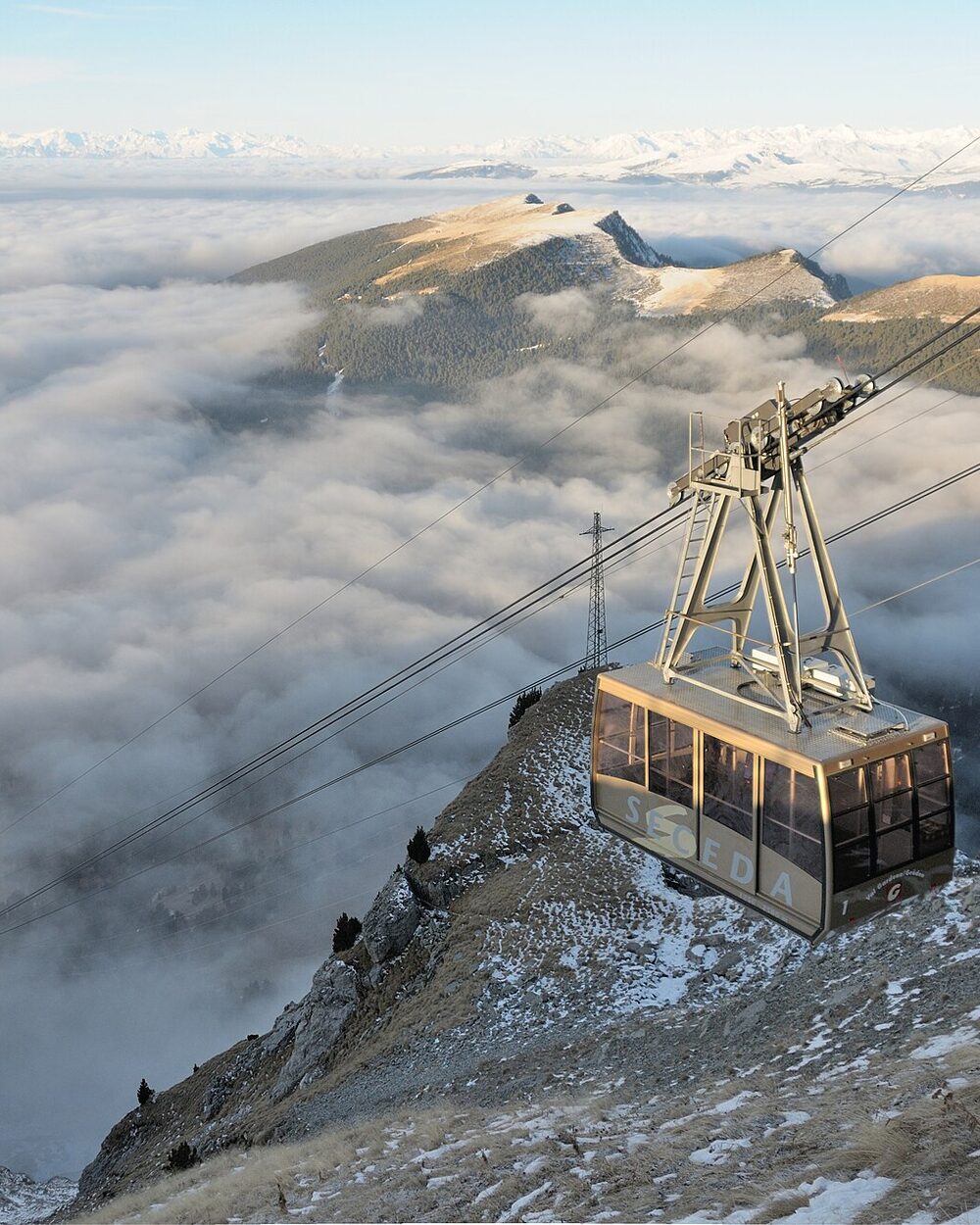
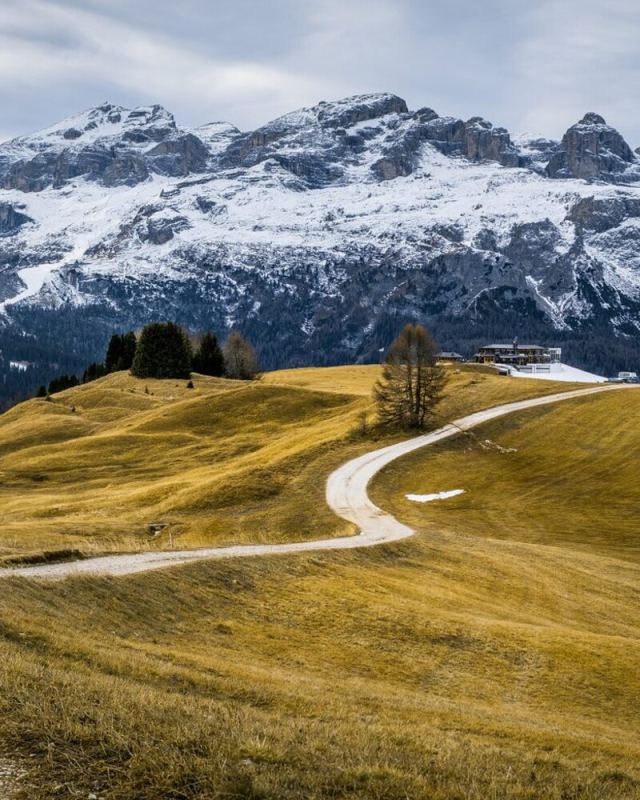
The Dolomites, in Italy's South Tyrol, are a different proposition: pale rock towers, Ladin and Italian culture, and food that is one of the region's great arguments. Winter means the Sellaronda circuit and the Dolomiti Superski pass; summer, when the mountain huts open, is arguably the better season, with via ferrata, high walking and road cycling over the passes. Aman Rosa Alpina in San Cassiano, Alta Badia, reopened in July 2025 after a complete rebuild, with 51 rooms and suites and a substantial spa. It closes around mid-October, reopens in early December, and rates start from around €1,600 a night.
If your dates fall between seasons
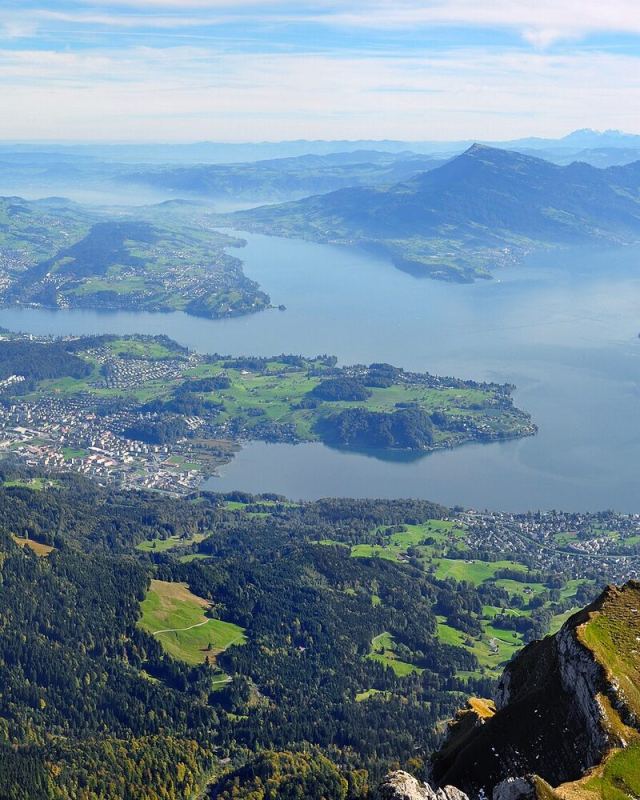
For May, October or November, go lower and find a lake. Bürgenstock Hotel & Alpine Spa stands on a ridge around 500 metres above Lake Lucerne, operates year-round and makes its multi-level spa, with an infinity pool at the cliff edge, the reason to stay. The Chedi and an autumn stay at the Kronenhof are the other between-season answers.
A few rules of thumb:
- Skiing from the door, with the Matterhorn: Riffelalp.
- Two proper seasons and grand-hotel ceremony: the Engadin.
- The most demanding skiing: Verbier.
- Families on skis: Courchevel.
- Summer walking and better food: the Dolomites.
Rates move sharply with the calendar, peaking at Christmas, New Year and February half-term, so treat every figure here as indicative, not a quote.